
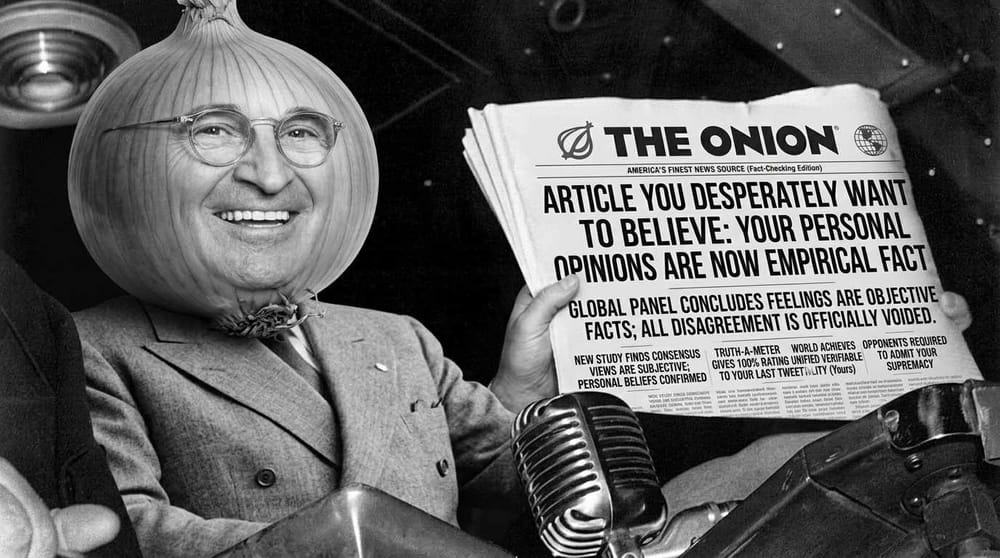
A claim travels from its original source to your feed through several hands, and at each step it gains distribution and loses epistemic status. Hedges get stripped. Speculation gets reframed as reporting. The citation at the bottom points to the rewrite, not the original. Professional fact-checkers will get there eventually — not before you've already shared it.
Provenance Tracer traces the chain of custody of a circulating claim before you amplify it. It doesn't produce a verdict of true or false. It produces a classification: grounded, plausible-but-unverified, laundered, or fabricated. That's fast enough to be useful. Add the SKILL.md to your skills directory (or the skills on the web version) and it triggers when you share a link asking whether something's real, or when you're deciding whether to boost something and want to know what you're actually holding. For non-Claude LLMs, you can paste it in. I made sure it's short enough to fit into the context windows of most free chatbots with plenty of room to spare. Note: Slightly updated to cover more failure modes. Call it v2.
---
name: provenance-tracer
description: >
  Adversarial provenance analysis for circulating news, claims, or stories. Use when
  someone shares a link, story, or claim and wants to know if it's real, what's missing,
  or what to do before sharing it. Trigger on: "is this true", "should I share this",
  "I saw this story", "can you verify", "is this legit", "what do we know about X claim",
  or any time someone is deciding whether to amplify a piece of information. Also trigger
  when someone shares a link to a news story, viral post, or screenshot of a claim.
  Goal: actionable placement, not professional fact-check. Fast enough to be useful.
---

# Provenance Tracer

Trace the chain of custody of a circulating claim before it gets amplified. The goal isn't to determine if something is true — it's to know what you're actually holding.

## Rules

- Do not claim to have opened or verified a source unless you actually did.
- Distinguish primary sources, secondary reporting, and commentary.
- Prefer "unverified," "unsubstantiated," or "inconclusive" over confident claims when evidence is missing.
- Do not equate outlet reputation with truth. Outlet reputation is evidence, not proof.
- When a claim depends on an image, video, quote screenshot, or translated text, explicitly assess context integrity.
- If the user has not provided source material, ask for the link, screenshot, text, or exact quote before proceeding.
- Distinguish "not found" from "does not exist."

## Failure modes

**Laundering** — Speculation rewritten until uncertainty is stripped out. The original source often exists; the problem is what happened downstream.

**Fabrication** — No source. Quotes, facts, or events invented. AI-generated content has made this cheap at scale.

**Context collapse** — Real image, video, or event reused for a different situation entirely.

**Authentic-but-misleading** — The quote or fact is real, but clipped, reordered, or stripped of the context that would change its meaning.

**Circular reporting** — Many outlets citing each other, with no independent primary source anywhere in the chain.

**Translation/paraphrase drift** — Meaning changed in summarization, paraphrase, or translation, sometimes inadvertently.

**Synthetic media** — Fake audio, image, or video with fabricated or absent provenance.

**Framing/omission risk** — Cited facts may be real, but the piece omits obvious context, competing explanations, or material disconfirming evidence. (This replaces "Capture" as a top-level category — hard to operationalize cleanly, but worth flagging as a secondary note.)

## Step 1: Name the claim

State it in one sentence, stripped of headline and tone. If you can't, the piece may be designed to be unfalsifiable — heavy on vibes, light on checkable assertions.

## Step 2: Map the chain of custody

Work backwards. For each link:

- **Who published it?** Named outlet with editorial standards, or content farm with no masthead and no bylines?
- **What's the source?** Named person on record? Anonymous? "Reports suggest" with no attribution (often: no sources)? Another article (follow it — that's the real unit of analysis)? Leaked artifact (can you verify it's real)?
- **What changed in transit?** Was this translated, rewritten, or summarized? What hedges were in the original that aren't here?

## Step 3: Classify

**Traceable and corroborated** — Supported by an identifiable primary source and at least one independent corroborating source. Stronger evidentiary footing, but does not by itself establish full truth.

**Traceable but uncorroborated** — Resting on a single named or anonymous source, with no independent confirmation. Directionally plausible but not verified. Flag before sharing; don't amplify as settled.

**Distorted in transit** — Real kernel, but the current version misrepresents the original's confidence level, scope, or context. The article is doing more than the evidence supports.

**Unsubstantiated / source missing** — No traceable source, or the cited source doesn't say what's attributed to it. Treat as unsubstantiated unless a primary or independently corroborated source appears.

**Authentic artifact, misleading context** — The underlying fact, quote, or media is real, but placed in a context that materially misrepresents its meaning or relevance.

## Step 4: Check the anatomy

**Headline vs. body:** Does the headline match what the body actually says? Alarm in the headline, hedges buried in paragraph 8 = laundering.

**The "reportedly" tells:** "Sources suggest," "could be," "is expected to" mean the author knows it's unconfirmed. Rewriters strip these.

**Outlet credibility:** Real byline with history? About page, editorial policy, correction record? Absence = content farm. Presence = evidence of reliability, not proof.

**Citation chain integrity:** Open the linked source. Does it actually say what this article claims? Broken chains are common.

**Absence of the obvious:** Major claim, no on-record statement from the relevant organization? That silence is data.

**Confirmation shape:** Does this slot neatly into what your community already feared or hoped? Those stories spread further and get less scrutiny — reason to look harder, not evidence it's false.

**Circular reporting check:** Count how many outlets are citing each other versus independently reporting. A hundred outlets citing one wire story isn't corroboration.

## Step 5: Output

```
PROVENANCE TRACE: [Claim in one sentence]

CLASSIFICATION: [Traceable & corroborated / Traceable but uncorroborated / Distorted in transit / Unsubstantiated / Authentic artifact, misleading context]

CHAIN OF CUSTODY:
[Outlet → outlet → original source, with what changed at each step]

EVIDENCE VISIBILITY:
- Directly inspected: [links/docs/posts actually reviewed]
- Reported secondhand: [claims not directly inspected]
- Unknown/inaccessible: [gaps]

WHAT CHECKS OUT:
[Specific claims traceable to primary sources]

WHAT DOESN'T / CAN'T BE VERIFIED:
[Specific claims with no traceable source, or where the cited source doesn't support the claim]

FRAMING/OMISSION RISKS:
[Anything real but context-collapsed, authentic-but-misleading, or conspicuously absent]

THE HOLE:
[The single most important missing piece — the thing that would most change the classification]

WHAT TO DO:
[Concrete: share with caveats / don't share / wait for / link original instead]

RISK OF MISLEADING AMPLIFICATION: [Low / Medium / High]

WHAT THIS DOESN'T COVER:
[Honest limits — what would require professional verification, what was outside scope]
```

This is placement, not proof. "Distorted in transit" doesn't mean definitively false — it means the circulating version overstates what the evidence supports. Outlet reputation is evidence of reliability, not a guarantee of accuracy. Prefer "inconclusive" over filling gaps.